
THE EMERGING PROPOSAL
Planning context
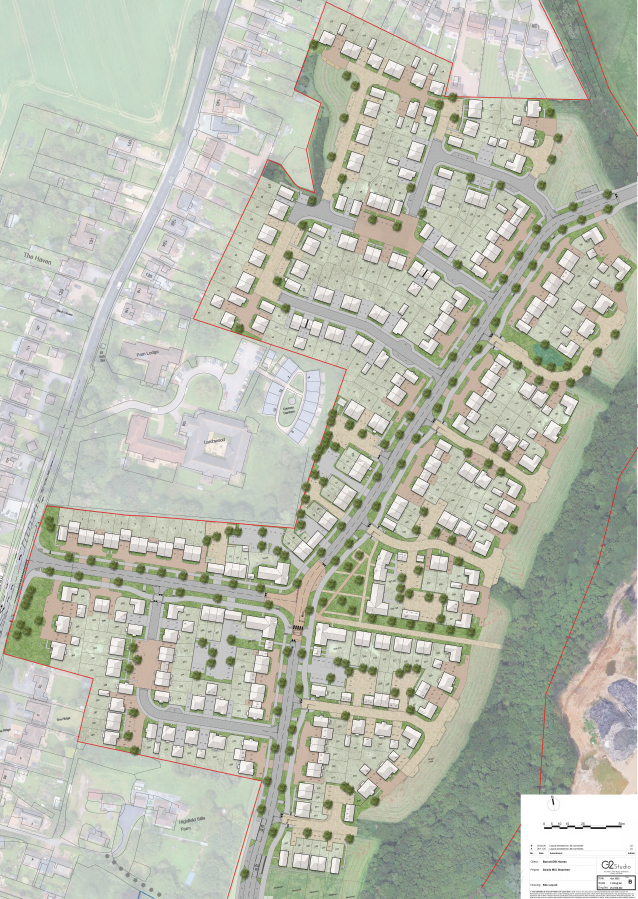
In 2021, Braintree Council granted outline planning permission with all matters reserved except for access for the provision of up to 1,000 homes, a new primary school, large new public open spaces and business premises across the site at Straits Mill.
The outline permission has established a framework for the finer details of development to be brought forward and determined by future reserved matters applications. The outline planning permission also set some specific parameters for the development, including details of access, drainage principles, a requirement for biodiversity enhancement and the provision of affordable dwellings.
Land East of Broad Road is also allocated in Braintree Council’s Local Plan Policy LPP18 for the development of up to 1,000 homes and a new primary school as well as business space.
PHASE 1A
300 high-quality homes, including 90 affordable homes
Variety of sizes of homes, including apartments and family homes
Materials that complement the look and feel of the local area
Biodiversity improvements with new tree and wildflower planting
New drainage measures designed to cope with a 1-in-100-year storm
Local job and apprenticeship opportunities
pHASE 1B
Loop road through the site connecting the two approved accesses on the A131 and Broad Road
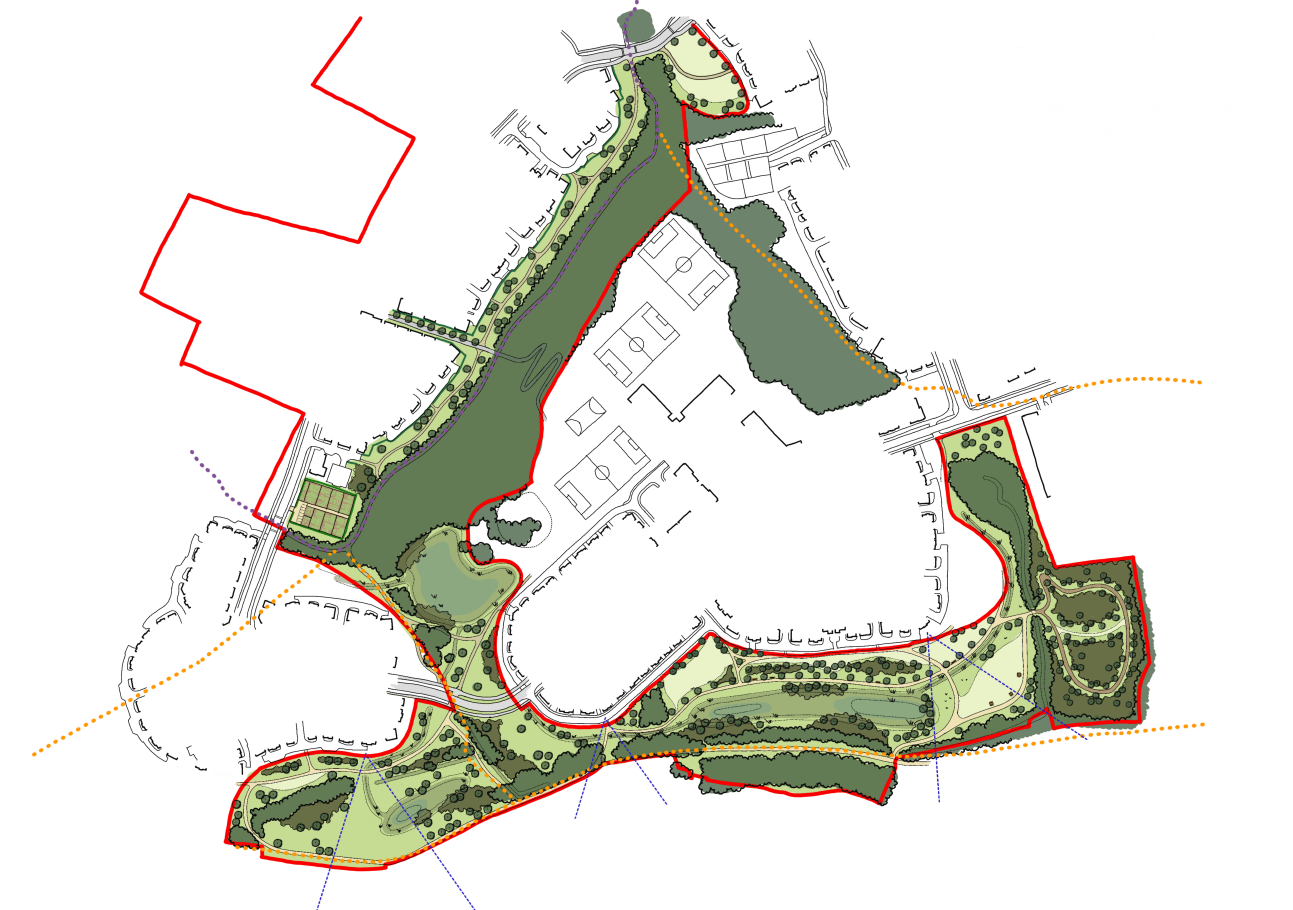
Large area of public open space located to the south of the site providing areas for play and recreation
DESIGN
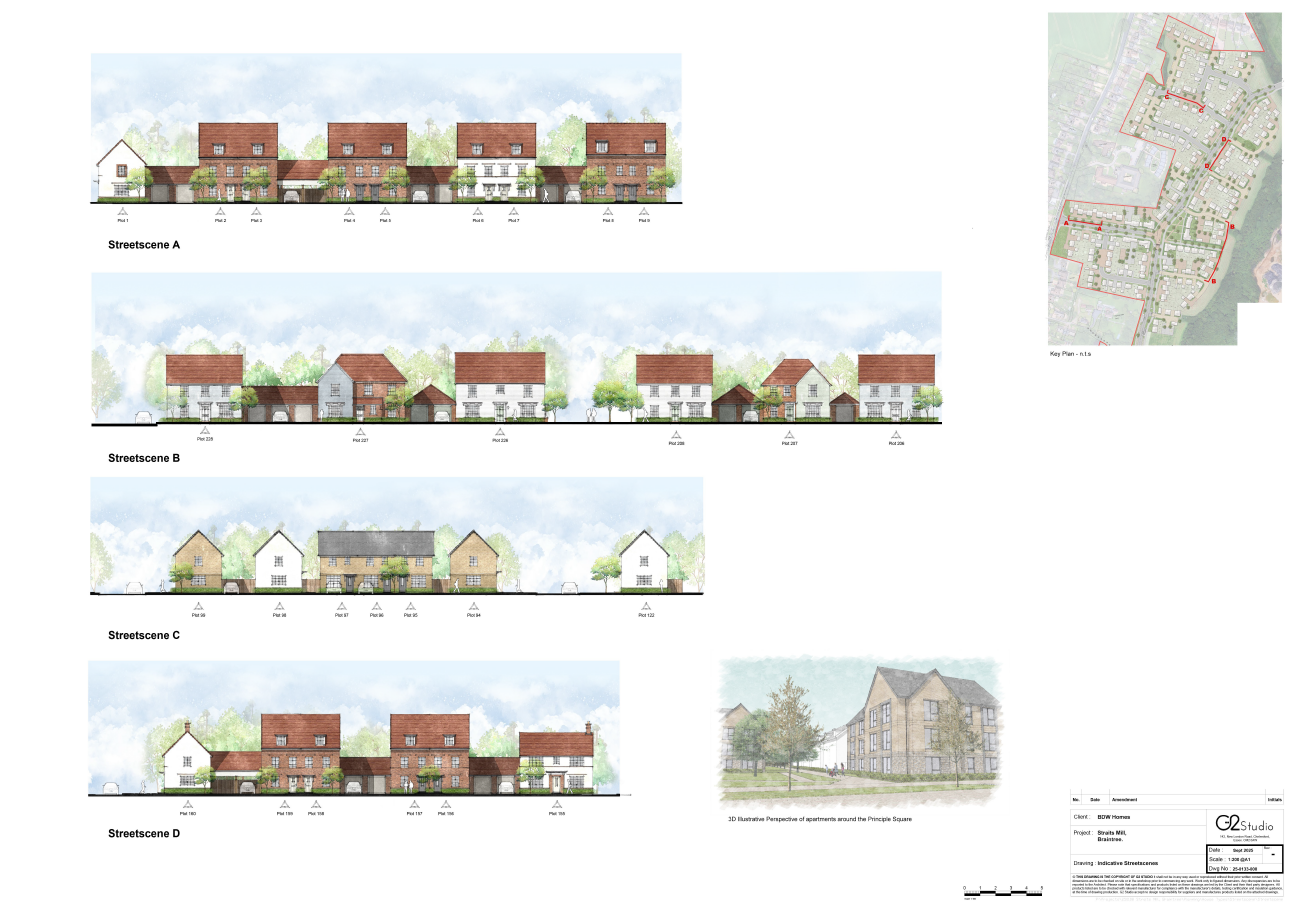
The appearance of homes within the first phase has been primarily informed by the Identity Areas set out in the Design Code approved at the outline stage. These set out the storey heights, building form, and material treatments.
Along the main spine road, the majority of homes are semi-detached dwellings of up to 2.5 storeys with a range of attached garages and carports. Material treatments are predominantly red brick, complemented by the use of render.
This area transitions into Identity Area Typology A as it approaches the Principal Square. Here, development is mainly terraced housing with reduced set-backs from the spine road and parking located to the rear. The architectural approach is simpler in form, drawing on cues in detailing and materials from Typology B1/B2 and the Principal Square.
The transition culminates at the Principal Square, where building heights increase to up to three storeys. Development adopts a more contemporary architectural style, with buff brickwork and refined detailing that addresses the generous central green space at the heart of the square.
Around the edge of the development along the Woodland Frontage Identity area, a traditional style of architecture and form is proposed with larger detached properties creating a softer organic edge to the development. The materials here are predominantly white and coloured weatherboard and the use to red brickwork.
housing
The housing mix is designed to respond to the need for more family homes. The mix will also deliver many smaller units to ensure the needs of older people (for downsizing) and younger people (first time buyers) will be met as identified in Braintree’s Housing Needs Assessment.
The emerging mix includes:
1 bedroom 44
2 bedroom 80
3 bedroom 72
4 bedroom 89
5 bedroom 15
Accessible bungalows will be provided.
In line with the outline planning permission, 30% of the homes will be classed as affordable. This will comprise a variety of homes for affordable rent and shared ownership spread throughout the layout.
landscaping
The landscape strategy follows the approved design code, using distinctive boundary treatments to define residential character areas and create a coherent, high‑quality streetscape.
Avenue tree planting along the main spine road provides structure, identity and seasonal interest, while residential planting delivers a cohesive landscape that prioritises biodiversity and year‑round variation.
At the site entrance, the principal square offers informal recreation opportunities, seating and play, creating an attractive gateway for residents.
The wider public open space incorporates native species planting, natural landscape spaces and integrated SuDS features to enhance habitat value and visual character. It also connects existing PRoW routes with new pedestrian and cycling links to support recreation and active travel.
highways
Barratt David Wilson are working closely with the local highways authority to ensure the local highways network can absorb extra demand.
The design process will be informed by an up to date traffic study and, where necessary, mitigation measures will be put in place to upgrade the local highways network.
Access details were approved as part of the outline permission.
drainage
A variety of measures are proposed to control and manage surface water run-off, to include permeable surfaces, swales and attenuation basins.
New trees, shrubs, hedgerows and wildflower planting will increase water uptake across the site to assist natural drainage.
Barratt David Wilson’s plan will be designed to cope with a 1-in-100-year storm event, plus allowances for climate change. The drainage strategy will consider the wider area around the site to ensure there is no impact on existing homes.
sustainability
Barratt David Wilson adopt a fabric first approach to their homes.
This means that energy efficiency is built into the design of every home, with materials selected for their efficiency, insulation properties and ability to utilise energy.
All homes will be built to the latest building regulations and include air source heat pumps.
EV charging infrastructure will be installed in every home and renewable technologies, such as solar PVs will be used too.